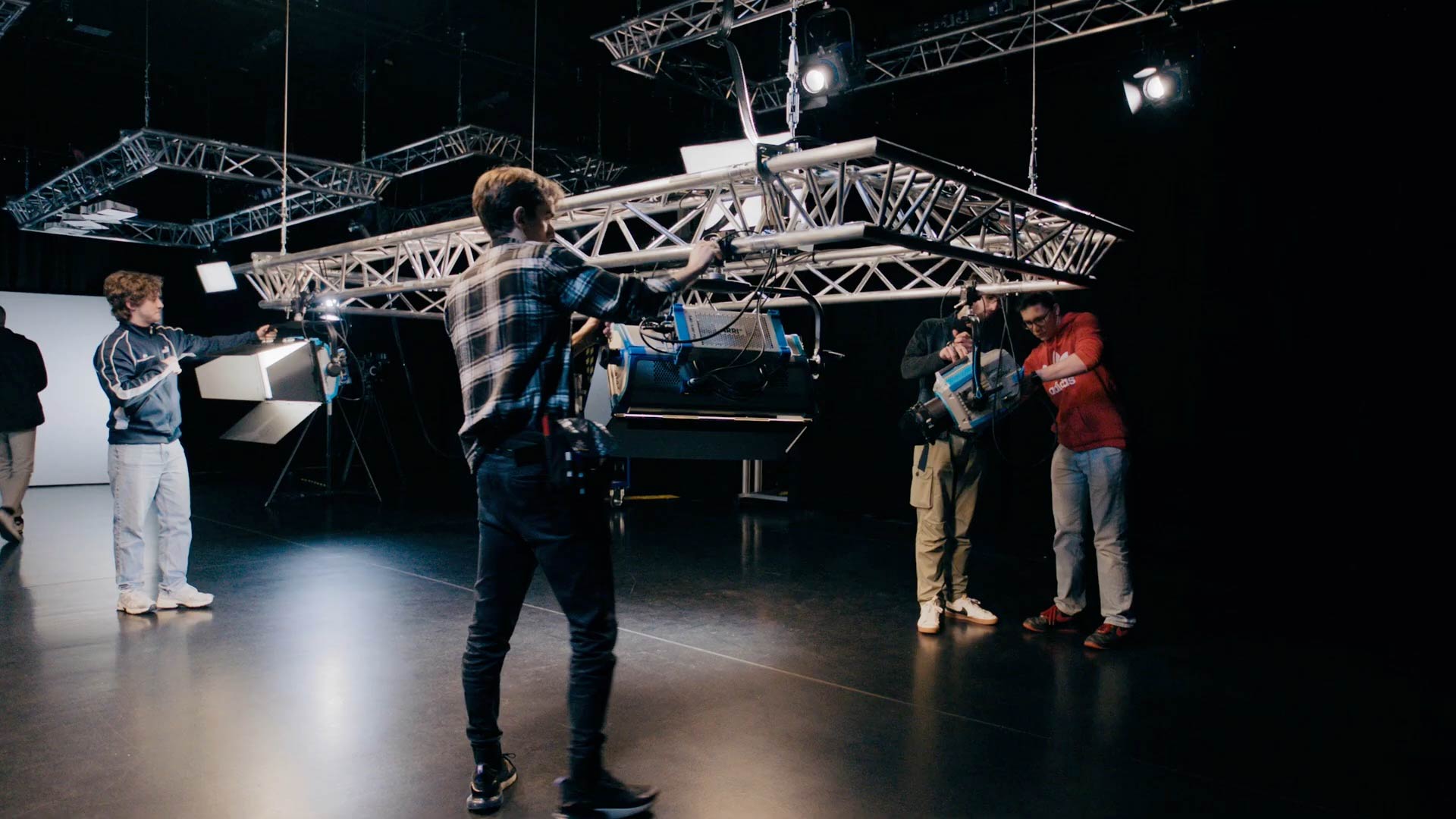
Arts & Humanities Research Films
"Research films have become an important way of communicating Arts and Humanities research, enabling researchers to share ideas, processes, partnerships and outcomes through a creative and accessible medium. They are a form of knowledge and cultural exchange that can make research visible to wider audiences, capturing the relationships, conversations and creative practices that underpin collaborative research.
Across the Cultures of _ programme, research films have been used to showcase the partnerships and collaborations developed across West Yorkshire, highlighting how researchers work alongside communities, cultural organisations, heritage partners, artists and practitioners.
A key contributor to this work has been Claire Bend, Film Technician for the School of Arts and Humanities, who is embedded within the Cultures of _ programme. Working closely with academics and external partners, Claire has helped develop film-based approaches to research communication, supporting researchers to build skills and confidence in filmmaking, storytelling and visual communication"
Research Films in Arts and Humanities (Professor Rowan Bailey, Director of Cultures of _)
Campus as a Garden
Creative health is about connecting people, nurturing wellbeing, and creating opportunities for communities to flourish. It is well known that gardening and being outside in the fresh Yorkshire air can have many health and wellbeing benefits, as well as providing a gentle form of exercise and improving mental health. Being surrounded by plants and flowers can help to reduce the heart rate and lower stress levels. Caring for and watching a living thing grow, can give a sense of achievement and reward.
Exploring how the University of Huddersfield’s commitment to Creative Health has influenced campus design, the film features Sustainability Manager Ben Onyido, and text from Sunday Times bestseller ‘The Well Gardened Mind’ read by the author Sue Stuart-Smith. The film uses slow film techniques to make the viewing experience mindful and relaxing.
The National Creative Health Hub at University of Huddersfield is a pioneering research and creative co-production hub, with a vision of advancing and embedding creative health provision across our region in collaboration with communities across West Yorkshire.
Stories in Motion
Made alongside the Cultures of Film team, Stories in Motion supported research into place-based cultural development in Kirklees. As part of Cultures of Film—a collaboration with local cultural and creative partners—we created two films. The first was a short call-out encouraging filmmakers of all experience levels, from professionals to home movie makers, to submit work. Designed for social media, it emphasised inclusivity, collaboration and co-production, resulting in more than 70 submissions.
As the project evolved, Stories in Motion became a key engagement tool for the emerging Kirklees Cultural Strategy. We developed a film and discussion toolkit using images from the exhibition to spark conversations about the past, present and future of culture in Kirklees. Rooted in locally created films, these resources reflected the voices and experiences of people who live and work in the borough.
Everything is Suspended in Movement
The film joins Dr Richard Mulhearn as he installs Everything is Suspended in Movement at the IOU Creation Centre in Halifax. Capturing the installation process and the opening night, the film explores the story of how the work came to be.
Reconnecting
Made in collaboration with Dr Iona Murphy and Dr Laura Mateescu, Reconnecting is Dr Iona Murphys six-month project to create a graphic novel with a group of young people who have experienced school exclusion. The group explored themes of exclusion and inclusion and worked with graphic artists to bring their own words and stories to life.
We designed a way to make this short film on the same terms as the graphic novel – the young people were supported, through a workshop, to made decisions about how the film would look, how they would be presented, and what questions they would ask and answer. The crew supported them to film and interview each other.
The final film was shown at the graphic novel launch event at University of Huddersfield and was displayed in the exhibition, as part of Cultures of Film.
Climate Mural
The Cultures of Climate Mural is a part of Cultures of Climate, the fourth iteration of the School of Arts and Humanities’ annual Cultures Of programme of place-based development from the Centre for Cultural Ecologies in Art, Design, and Architecture. Running from 2025 to 2026, Cultures of Climate features exhibitions, installations, performances, workshops, podcasts, talks, and discussions about the climate crisis through art and creative activities. The interactive Climate Mural was created by Beth Morgan, Cultural Programme Co-ordinator and artist.
Agreed Facts?
The project captures the voices and living spaces of former Just Stop Oil activists, situating their lived experiences against the legal-political backlash and media spectacle their actions intentionally provoke. Drawing on themes of mobility and immobility, justice and injustice, it interrogates how climate protest is being policed, prosecuted and represented, and how individuals reconcile the personal costs of dissent with the urgency of addressing the breakdown of human life on Earth. At its core, this project considers the three principles of UK justice - Independence, Impartiality, Integrity - through the eyes of those criminalised for trying to get those in authority to act on scientific warnings.
Created with Dr Kirsty Styles and Dr Laura Mateescu as part of Climate Ecologies: Responses to the Panicocene, bringing together staff from the School of Arts and Humanities. Projects respond to the Reimagining Climate (Im)mobilities in the Panicocene conference, co-organised by Giacomelli and Professor Andrew Baldwin (School of Geography, Durham University), and developed with support from Cultures of Climate.
Mondays at the Museum
Mondays at the Museum (MATM) is a partnership programme bringing heritage and creative health together to strengthen connection and wellbeing via inclusive, accessible activities. As a co-created project between University of Huddersfield and all the partners involved in making MATM happen, this film was produced alongside a report, toolkit and template, to help share the great practice of MATM, and to document some of the people who made MATM a special place.
Saturday Art Club
In early 2025, Kirklees Museums and Galleries partnered with the University of Huddersfield to deliver the National Saturday Club - a six-month creative programme that gave local young people the chance to explore art, design, and heritage in exciting new ways.
From January to May, around 20 young people aged 13-16 took part in weekly sessions across our museums, historic sites, and cultural venues. Their commitment and enthusiasm made the project a vibrant journey of creativity, confidence, and connection.
We produced this video towards the end of the programme, using film to give the young people and their parents and guardians a way to talk about the impact of the club. On the day, we were overwhelmed with how many of the participants wanted to speak on camera, which is testament to its impact. To make sure that all everyone was included in the film in a way that they felt able to engage, one of the young people who did not want to appear, instead tried out being on the other side of the camera, and did some creative filming that was included in the final edit.
Family Routes
Made to support the cultural and knowledge exchange processes of a co-created project conducted between April 2024-November 2024, entitled Family Routes, by Dr Anna Powell and Dr Louise Platt.
The researchers were using creative methods to explore the everyday walking practices of families, and crucially, listen to every member of the family, from the youngest to oldest.
Film was a perfect medium to capture the experiences of the youngest people in the experiment, by replicating their own view in a direct, almost unedited way. The researchers accompanied families on their walks, and we used go-pro cameras to record the point of view of the children. Depending on the age and preferences of each child, some wore cameras on hats or chest straps, some cameras were attached to prams or push chairs. The resulting video was extremely revealing, enabling viewers and the researchers to experience the journey from the child’s view, following what they see and hear, what caught their attention, what dominates their visuals, what makes up their experience of walking.